Monday, July 17, 2006

I Guess Gay Doesn't Mean Happy

Photobucket - Video and Image Hosting

The incredibly tedious Opening Ceremonies to this year's Gay Games should serve as a stern warning about the terrible price of mainstreaming. For four excruciating hours on Saturday evening, my butt sweated on a hard plastic chair in Soldier Field in 90-plus degree heat as I watched what can only be described as the most miserable high school assembly I have ever had to attend. And the worst part is, I actually paid to be there.

Not so much money as the participants, who should be howling that the best part of the show happened long after they left the stadium, which they had to do if they were competing in the next day's 6am triathalon. Not so much as the suckers who coughed up 100 or 150 bucks a seat. I bought my tickets Friday afternoon, shelling out 35 per plus handling fees for two mediocre seats above the timber line of the stadium. That night, I watched in horror as fistfuls of free tickets were given away at the bars in my neighborhood, apparently because saner people than I had just said no to the 35-dollar base ticket price.

I should have known this was a bad sign, but I consoled myself with having donated money to a "good" cause. And drank another double pint of Harp.

Next day, with enough free tickets in our hands to gain separate entrance for each one of all our various limbs, should we choose to play twister among the stadium seats, my friends and I climbed the ramps to the top of Soldier Field. At 8pm, the start of the festivities, the seats were still fairly empty, though that changed in the next hour to about half full.

The sun was sinking behind the Greek pillars at the top of the old part of the stadium, and it was a beautiful, if sultry, evening. I admit I had my fears when I looked at the organization of the program: five parts to the ceremonies, each with its own theme. First, a "Prologue," with speeches of welcome and the procession of athletes from all over the world. Megan Mullally was supposed to say something.

Second, "Exclusion" would feature a dance of some kind, Kate Clinton, a song by Andy Bell of Erasure, and four legends of women's music--Holly Near, Barbara Higbie, Nedra Johnson, and Teresa Trull. Hmmm. A little slow, but I guess there has to be some solemnity, right?

Then I saw that the third part of the program was called "Oppression."

Oh, no, I thought. This is going to suck.

"Oppression" looked like it would go on forever. Scheduled were speeches by James Hormel, and George Takei, another Andy Bell song, a tribute to Tom Waddell, an award in his name, more speeches, a Jody Watley song,a "rainbow run" against HIV and cancer, and something with the AIDS quilt.

Then would come "Expression." This would feature more dancing, a song by Heather Small, a song by Andy Bell, some marching bands, and Margaret Cho. Are you counting? Are we done yet? Hey, Margaret Cho will be there! How bad could it be?

Oh, then there would be "Ignition" and the lighting of the torch. Cool! I love giant torches!

So the program starts. The athletes march in, and it's really nice to see so many people from so far away. China, for instance. A huge bunch from The Netherlands. Bulgaria. One lone guy from Uganda with a handwritten sign who got a huge ovation. More people from California than from all the other countries combined. Until Chicago showed up. Twenty-one hundred people from Chicago.

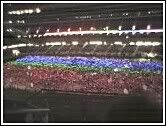
The lights go off and all the athletes are holding variously-colored glowsticks, to form a giant rainbow flag on the filed. Cool! How did they get the bands of color so nicely organized? You can see a fuzzy approximation of the colors in the tiny picture above that I took with my cell phone.

Megan Mullally was in a hot little black and white dress and spike heels so high she looked like she was on point. Her voice was rich and warm, and she was relaxed as she slammed the Rupublicans for the politics of exclusion. She was great. We loved her.

Unfortunately, things went downhill from there. I'll summarize by saying we sat though interminable sad and angry speeches. Even Kate Clinton wasn't funny--she just spoke very slowly about how hard it had been to be a female athlete when she was young. OK Kate, but can you tell a story? You were a high school English teacher once, for crying out loud! Can ya give us an illustrative example? It's 92 degrees out here and the only thing to drink is Miller and Bud Light! Pleeeese!

At some point an actor read a gay boy's suicide note. An angry woman raged about the Bush administration. Someone started a speech and I heard, faintly, a man's voice in the stands screaming "We Know!"

Unfortunately, nobody heard him, and the speeches droned on. Andy Bell kept appearing with listless disco anthems. Everyone was wilting. The four women's music ladies belted out an extremely depressing a capella "We are a gentle angry people, and we are singing, singing for our lives," putting the "eee!" in "cliche."

The dance numbers were, well, odd. They featured people in strangely caped costumes and one lone guy in a t-shirt that looked like an International Male take on the wifebeater, and this guy kept flexing his arms beseechingly at the heavens. Maybe he was imploring the Goddess to end it all with a hailstorm. At one point Greg Louganis gave out an award, but I couldn't hear anything because my head had melted and collapsed like a candle.

"Good luck with this," some cute boys said, gesturing at the field as they left the row next to us. By the time the gay marching bands, drill teams, and flag twirlers came on, it was past 11pm, and lots of people had fled the stadium in disgust. The bands were great but my ass was permanently stuck to my seat, and a thin plastic veil of heat grime covered my face and neck. How had we fallen so far? Where was the irony? Where were the drag queens, for heaven's sake? Gays were the people responsible for the best entertainment and cultural production of the twentieth century, and THIS was the best we could do?

The whole thing reminded me of that dreadful queer tv show from the early 90s, the one that took itself so seriously and tried so hard to be politically meaningful and socially non-offensive that it was unwatchable. What was it called? Ugh.

The marching band was terrific. Where had they been for these long three hours? Just as they began making formations, a streaker ran across the field. Everyone perked up immediately.

The streaker surrendered quietly to security guards at the other end of the field, and I blessed him in my heart for having remembered how to be entertaining.

Margaret Cho commented on the streaker, noting that when she saw his balls whizzing by her face, she knew she was at the Gay Games. Everyone laughed, probably because that was the first they had heard of it. Gay? Up until then, a Promise Keepers rally would have been more exciting.

A cool acrobatic troup in tighty whities rolled hamster wheels around the stadium, then somebody lit the torch, and eventually some real pretty fireworks went off, but by then everyone was cross. The worst moment was being one of five people left in the entire stadium to applaud the last song, a terrific number by the Gay Games Mixed Chorus, who sat there all night in long-sleeved white clothing only to have ABSOLUTELY NOBODY left to hear them perform.

Which brings me to my question.

Why does every gay event have to look like every other gay event? Is an athletic event the same as a Pride March which is like a protest which becomes Take Back the Night?

Why Exclusion AND Oppression? Is it worth being pious if you make everyone so angry and bored that they associate politics with torture? Should people pay to be tortured like this?

Okay, those are lots of questions. But seriously. The "real" Olympics pays tribute to the courage of athletes without making us watch two hours of clips about Bosnia and footage of the Olympic hostages. The "real" Olympics has a sense of the balance between respect and celebration, politics and triumph, tragedy and hope. Where were the gay and lesbian athletes that felt not only the agony of defeat, but the thrill of victory? Billie, Martina, Greg, Brian?

Most important of all, where were the drag queens? Drag emcees? Baton twirlers? tumblers? Female impersonators?

Even Janet Jackson flashed some booby at the Superbowl.

Saturday, July 08, 2006

Insensitive, or Just Bad Timing?

Photobucket - Video and Image Hosting

Is it me, or does anybody else agree that it was in really poor taste for the New York Times to publish, in the same week that both New York and Georgia rejected same-sex marriage, Maureen Dowd's insipid column today about heterosexual married couples getting all giddy about amalgamating their last names?

Whether we agree with marriage or not, it is hard not to feel disheartened and depressed about this week's bad news. New York decided that heterosexual unions are less stable than ours, but that the children of heterosexuals are more worthy of state interest and protection than the children of same-sex couples. The New York majority decision also recirculated the unproven assumption that children who grow up in heterosexual households are better off than children who don't. The "truth" of this assumption will be news to people who grew up with fathers or mothers who beat them and raped them while their opposite-sex spouses looked the other way. Apparently half-baked, unproven moral opinions are suddenly valid if uttered by judges. But I digress.

I didn't link to it because it's on Times Select, so unless you are paying for the paper I don't think you can read it. But it doesn't matter, cause it's stupid, and I'll tell you about it here.

To begin by adding insult to injury, Dowd titles her piece "A Tale of Two Rachels," leading many a reader to wonder, hope even, that she was really, for once, talking about two women. Maybe even women in a couple. But nope! Fooled ya! She's talking about a married man and woman who decide to make their first and last names the same! How freakin' hilarious is that! The woman takes her husband's last name, and the husband takes his wife's first name--but ends up only using it as an initial, to avoid problems making plane reservations! So he's still a guy on paper, and she's got his last name!

Those heterosexuals are so rad! Changing society one custom at a time!

Another couple decided that the wife would legally change her name to his when they had kids, but keep her "maiden" (ya, right) name as her professional moniker. Amazing!

The only guy in Dowd's account to truly change his last name is Tony Villaraigosa, the mayor of LA, who by all accounts seems like an ok dude. Yay, T. V.! You got a pretty name out of the deal, too.

Changing your name is icing on the cake, the mere symbol of the union already recognized by the law, the state, the church, the families, the neighbors, and everyone else, when one is legally married. It's frivolous and fun, and anyone who wants to do it should have a good time being inventive.

But seriously, kids. Is this the right week to gloat about it?

Thursday, July 06, 2006

what happens in vegas, stays everybody else's access to marriage

Photobucket - Video and Image Hosting

So New York decides not to extend marriage to same-sex couples on account of how the blanket of marriage seems too small to cover those darn impulsive straights. With three in the majority, one supporting, and two dissenting, the court argued that opposite-sex people need marriage because they can accidentally become parents at any time, while same-sex people cannot:

"These [same-sex] couples can become parents by adoption, or by artificial insemination or other technological marvels, but they do not become parents as a result of accident or impulse. The Legislature could find that unstable relationships between people of the opposite sex present a greater danger that children will be born into or grow up in unstable homes than is the case with
same-sex couples, and thus that promoting stability in opposite-sex relationships will help children more. This is one reason why the Legislature could rationally offer the benefits of marriage to opposite-sex couples only."

I so wish this would mean that infertile couples now can't marry, and post-menopausal women can't marry, and impotent men can't marry. What if you couldn't marry if you need a surrogate, or in vitro fertilization, or fertility treatments of any kind? Or if you're old? Or if you need Viagra? Or if you've had a hysterectomy, or a vasectomy, or had your tubes tied? Or if you're on the pill? There'd be hell to pay, that's what.

It's clear that there's a willing blindness here about non-reproductive heterosexual sexual activity. After all, as the judges argue:

"A person's preference for the sort of sexual activity that cannot lead to the birth of children is relevant to the State's interest in fostering relationships that will serve children best."

The decision later takes up the question of excluding childless straight couples and dismisses it by arguing that such an exclusion would be too intrusive. Apparently, however, it's not intrusive to prohibit gay and lesbian parents from marrying. So the possible but unlikely children of childless het couples are more worthy of potential protection than the actual, living and breathing children of gay couples? Or is it just that straights are way more unstable, as a rule?

And does this mean that marriage will be extended to polygamists? After all, if anybody is engaging in sexual activities that could lead to accidental and impulsive conception, it's those Big Lovers, right?

I think it's time to hurl ourselves into the fray, and I encourage all of you to out every straight couple using birth control to your local officials and representatives. Those of you who prefer oral or anal sex, or do use birth control, or cannot conceive without performance-enhancing drugs or fertility treatments, you are on notice. Your parasitic enjoyment of the rights and privileges reserved for breeders is over, your queer status now about to be revealed as anti-American and selfish.

Meanwhile, we lezzie girls need to throw a sperm-wrestling party or two, while the homo boys can play "surrogate toss," if they can find women willing to be human horseshoes. These diversions should up the accidental factor enough to get us our piece of the marriage pie, and also prove an entertaining spectacle. Cheer up, queers. Summer picnics in the park are about to get a lot more interesting.

Friday, June 30, 2006

dyke march saturday

Photobucket - Video and Image Hosting

Oso raro's lovely tribute to gay pride moved me to relate my own pride story, or Pride Eve story, about Saturday, the day before pride, which in some cities is dyke day. It's dyke day because it's the day of the dyke march, a tradition that started for me back in the early nineties in New York City, when the girlz decided they needed their own parade of power. I remember marching up the big avenues behind Lesbian Avengers waving giant guns. My friends and I applauded the energy, but guns? we wondered. Weren't we supposed to be a GENTLE Angry People?

This year we faithfully turned up for the dyke march in our city, a much smaller affair up in the northern part of town. Yes, we have Dykes on Bikes. No, we don't have a lot--maybe ten bikes in all. But the ladies are tough as nails, and the bikes are almost all Harleys. They rev their engines and send smoke and fumes into the air, and everyone screams and swoons, and it's good unclean fun.

There are placards, and a few organizations, and people on the sidewalks wondering what we are marching for. There is a group of drummers on the corner making sure we make the turn heading down towards the lake. There are women wearing nothing but crosses of electrical tape over their nipples. Some of us exchange stories about the awkwardness of running into students who insist on hugging us in their electrically-taped dishabille. One of us reflects on the perkiness of young breasts, observing that if she taped Xs on her nipples, no one would see the tape, since everything would be pointing down and hanging so low anyway. Several nod mournfully.

One of the benefits of being older and more experienced is realizing that you can do the main part of the march, then avoid the boring rally afterwards. Also the participants there are 20 years old. This is new to them. We, on the other hand, are hungry.

We cut out, find a cafe, and eat nachos and drink a couple beers. Then it is time to check out the festivities in the neighborhood. Lesbians from the suburbs have flocked in to socialize with other lesbians at bars and boring parties in parking lots where you pay 10 dollars to hear a cover band that sucks, where everyone is a stranger (not in a good way), and a plastic cup of Miller runs you five bucks apiece. Meanwhile, just outside Satan's Sandlot, a perfectly nice bar with window seats looking out on the street sits empty. You have paid dearly for a crappy party, but you choose the bar. It proves a good choice.

You sit with your gf and order a drink. Friends see you in the window and join you. At some point the table is full, and more and more women are coming in the bar. We hold the table, sending out scouts for hotdogs, brats, veggieburgers, fries. At some point it is time to have a roundtable. It begins innocently, with the lesbian ritual known as the Feeling of Muscles. Each bicep is flexed and given appreciative treatment by the group as a whole. Workout strategies are exchanged. I wish to point out that the feminine types are the most eager to have their muscles measured.

It is time for the Throwing Out of Topics. We are all trying to play it cool, but eyes are shining. Everyone is revved up to see so many women pouring out onto the streets of our neighborhood. The whole town seems bursting with lesbians. Bursting.

"Vibrators: Blessing or Curse?" is the first topic, followed by "Dildos: Relationship Fad or Fixture?" And we're off.

I'm happy to report that despite some of us grumbling that vibrators have ruined the finesse of lesbian sex (how are those machine-dependent girls ever going to learn technique?) most of us are eager FOH, or Friends of Hitachi, which if you don't know is the Harley of vibrators. Accept no substitutes.

I am also happy to report that while some of us only strap it on occasionally and even listlessly, others among us cultivate a dildo collection with rare discernment. I learned that one way to impress your girl is to carry your toys in a briefcase. Agent 99, we've simply got to go over this paperwork!

As the evening wore on, most of us became more animated, rather than less. It began to dawn on gf and I that this was all adding up to big time foreplay for the couples around us. Even the single people seemed to be planning a hot date with themselves. The final straw was a heated discussion about the best time of the day for sex, followed by an analysis of days of the week. By the time the group broke up, it seemed pretty sure that everyone in the group was going to get lucky that night.

So did we? They? Answering these questions directly can be construed as crass, but I can say with absolute certainty that no one should ever underestimate the empowering effects of sexualized conversation on a group of lesbians sitting in a bar filled with lesbians on a street populated by lesbians in a city euphoric for gay pride. That's all I'm saying.

The next day was fun, but anticlimactic after the night before (cough). We ran into some of the same friends on the street during the pride parade, and we all hung out for a while in the sun. At one point I thought I'd joke with them. "So, was the evening successful?" I asked, laughing. One friend answered me right away.

"Let's just say I told her there was no way she was coming home last night and playing with the dog!"

That reminds me of a good topic for next year's bar panel. "Lesbians cats and dogs: amiable roommates or kinky, furry little voyeurs?"

Wednesday, June 28, 2006

Zenoville

Photobucket - Video and Image Hosting

I take my trip to State School Town to look at housing. The day is gorgeous--partly sunny and dry, with temperatures in the 70s. I dawdle until noon, then finally start on the road.

The day feels surreal and dreamlike, especially because one of the main roads out of the city is under construction, and that means vast tracts of concrete in the middle of a busy highway have become pedestrian squares filled with construction workers and swirling white dust. Driving slowly by in one lane of traffic, I think about walking versus driving, about feeling the ground under my feet, about the engineering marvel of the highway, about Roman times, about the thin wires of technology holding up everyday reality. I remember the time a girlfriend and I hitchhiked to Connecticut my first year of college, drinking peppermint schnapps out of a bota bag by an underpass to pass the time before going back out on the road to stick out our thumbs. When too many cars went by us, she would announce that it was time to take down my hair. I would undo my braid, and shake out my waist-length locks. She was smart. Truckers usually stopped for us right away.

Today I open the sunroof, turn up the ac (a very un-pc trick taught to me by my southern California gf) and crank the tunes on my ipod.

The drive in June is much nicer than it is in March. The fields are kale-green and the sky is big and warm. There are MacDonalds everywhere, though that is not a good thing. I realize I am hungry, stop, buy, and eat a fish filet, and marvel at the angry feeling it gives my body for hours afterward. I am no health food nut, but there is no way that food isn't bad bad bad for you.

I enter town with a map, my face slightly tanned from the drive, and kill a half-hour navigating around. I have lived in towns like this one before. It is pretty and suburban, with shady streets and sidewalks next to real working fields. The University sprawls along the main road of town, its older pavilions and arenas set back from the street. It isn't a striver's school, such as you find in the east, or in the city; it doesn't have to compete with private small colleges or elite universities nearby. This University, the flagship university of a midwestern state, possesses a stately, middle-class assurance, its boundary lines marked with large brick wall-corners like you find in upscale housing developments.

I find my first house--a low, pleasant ranch on a leafy, well-manicured lot. I meet the owner and his father, the first a youngish kid in his twenties looking to find his way in the world, the second his highly successful dad desperate to make sure his son gets a profession. I talk with them for an hour, for once grateful that I am not a boy with wealthy parents. At first I think there is no way I can live here. Let's just say there is no sense of feng shui to be had in the arrangement of furniture in the rooms. Let's just say the father corrects everything you say. Let's say I grow tired trying to introduce topics of conversation. Let's say it's too easy to picture a house full of 25-year-old boys watching football and me, the strange older woman with really short hair, skulking around the kitchen.

After talking with them, though, I look around with fresh eyes. The dad has grilled me, and is satisfied that I am a serious person--a prize, in fact. My PhD apparently means that I know how to study. My age and gender suggest I'm not looking to marry his son. He wants my gravitas to rub off on his progeny. The kid just wants a living situation that isn't depressing. I just want roommates who don't care if I spend weekends away in the city with my gf, or am always in the library, or eat nothing but frozen diet dinners for months on end. I walk outside. Across the street is a field of vegetable plots you could rent if you wanted a garden. A tar running path runs down the road, rolling away towards parks and more fields. A running path.

I remember what it was like for me to live in a town much like this one, years and years ago. Just out of college, starting an MA, I took up running and quit the cigarette habit I began in high school. I remember the cameraderie of that town, where everyone was either a student, a professor, or someone who had moved there for school and stayed there for the quality of life. I remember the bars, the library, the peaceful, disciplined routine one lives on the way to a goal. It was the same when I moved to another state and another college town for my PhD. Classes, then working out, then a quick dinner, then the library. Every day happily the same, with excess and despair pushed to the margins by the the dream of completion. Long bike rides on winding back roads. The hot summer smells of dust and rain and sun on freshly-oiled tar.

This kind of life runs on dreams. The dream of graduation, the dream of an academic job, the dream, now, of a law degree and a decent position back in the city, a new car for the first time in my life, a place owned, not rented. New dreams, but also old ones. I have been here before, taking small but determined steps towards goals that forever recede from me, a Zeno's paradox of progress and delay, desire and frustration.

I have two hours to kill before my next appointment, so I find a coffee shop and order a giant latte. I have a trashy historical romance that I can't put down. My skin is tingling from all these new places. I am already becoming new, or old, or something that feels more realized.

I drive to the next house at the exact hour. It is a big, rambling farmhouse. In the back is a huge lot and a wild, overgrown vegetable garden. Green onions have thickened and shot up four feet high. A squash plant has clambered up the compost heap. In the undergrowth I see two sturdy rows of kale greens.

A very pregnant young woman greets me at the door. She is friendly, foreign. In the kitchen a big wooden table and benches mark a communal space. Someone is boiling pasta. I meet several women, all warm. There are plants everywhere, in the windows, on the shelves. I think maybe I could like it here. Someone offers to show me the house.

We walk back out to the garden. My guide has no idea what is growing there, and intimates that the vegetable garden is a cyclical phenomenon, dependent on the current tenants and their inclinations. Visions of gardening dance in my head. I start cataloguing the vegetables I will grow. A big tuft of tigerlilies sits in the yard, reminding me of home. This is looking good.

The livingroom is my first warning that all is not well. There isn't a scrap of carpet on the well-worn wooden floor. All the furniture is threadbare, sunken, and slightly sticky-looking. Nothing matches. The walls haven't seen paint or paper in years. Boxes and air conditioners sit by the front door, along with a few wooden chairs. The windowsill on the window by the stairs is naked wood, gray and ragged. The sagging, scuffed stairs going to the second floor ring hollow under my feet, like little wooden drums.

Upstairs, the rooms are bare and worn. One bedroom has cheerful peach paint; the rest are in various states of catastrophe. One has a sleeper loveseat for a bed, and papers and empty cups everywhere on the floor. "My" room looks as if a tripping person tried to paint it twenty years ago but kept running out of paint, trying different colors until finally giving up and falling asleep. The ceiling is peeling and hanging down in places. Most rooms have mattresses on the floor. Nobody has a rug, or a pretty bedspread, or a FREAKING BROOM. The upstairs apartment, which has its own kitchen and bathroom, is the homiest space in the house, but occupied.

Slightly disturbed, I go down to dinner.

Everyone introduces themselves, giving charming two-minute speeches. Some of them have come back to school. Some are undergraduates. Some have gone away and come back, unable to find something somewhere else to hold them. Most talk of moving on this month, this summer, this year--to another house, another city, or traveling. They have dignity. They are transient. They come back over and over to live cheap, regroup, reinvent themselves. They ask me about myself and I tell them. They murmur supportively.

I tell them that I like them, and I mean it. They are wonderful, thoughtful, rootless. I wish I could live here. I know I could take over, fix things, clean it up, make it better. Rugs, paint, and little ceiling tape would work wonders. I have enough to do as it is, though. I also have to reinvent myself. I have to have carpets, comfort, a running path, a grown-up life. I drive away into the darkness, gauging how it feels to be going back to the city. I have to imagine coming back, too. In the dark I am doing both, remembering the cycles of leaving and return I have known elsewhere, trying to imagine the kinds of movement that will come.

Tuesday, June 20, 2006

Left Hanging

Photobucket - Video and Image Hosting

Law school starts in less than two months, and I have absolutely no idea yet where I'm going to live. And it's driving me crazy.

I'm totally stressed out about moving away, leaving my home with gf, missing my cats, dealing with lots of strange people under 25, being a big old dyke in a midwestern university town, failing, being disorganized, being lonely, having too many friends.

It's not as if I haven't been obsessing about housing for months now. It's not as if I couldn't have gotten this squared away a while ago. I think this is the reason for my obsessively combing the housing ads, posting profiles on the admitted students forum, asking all my friends for advice, and doing tarot readings over and over and over again.

See, I'm the kind of person who likes to get stuff like this squared away. And the cards are telling me I can't do it like that.

So far I've posted two profiles on the housing section of the admitted students forum and gotten one response, from a guy also starting law school who decided to buy a house. Our emails have never really connected, and I eventually gave up on him. I checked out cooperative housing, and even made a date to go check out one house of seven people. I asked the cards. They weren't crazy about the idea AT ALL.

I looked at apartments ads. I asked the cards. "Hmmm . . . nah," they said.

Then last week, the day before I am supposed to go check out the group house, I burn my face and neck frying chicken for a dinner for my friends. I had just realized I didn't have a splatter guard for my skillet, made the decision to transfer the chicken to a safer pot, and then, before I could even move it, it popped at me. It was as if I knew it would happen.

I still made a fabulous dinner of fried chicken, collard greens, cornbread, coleslaw, and gravy; I just looked like I had taken my face for a drive.

So now I have burns on my neck and one cheek, and I'm feeling really, really attractive. Again I ask the cards about housing. This time the cards are read for me by a friend who gives me an aloe plant for my face. "Disaster," the cards say. "Stop rushing this."

My friend looks at me. "There's something you don't know," she says.

"What?" I ask.

"I don't know," she says. "The cards think you are afraid."

By now I am. I postpone the trip.

So I plan another visit, even though the cards are making me feel really bad about this. "How about getting my own place?" I ask.

"Maybe," they say.

"Is that all you can give me?" I ask.

"For now," they say.

I ask about the trip. "It's a good trip," they say.

I am thinking, "How can it be a good trip if the house is wrong?" But I don't argue with them. You can't argue with the cards, you know.

Today I hear back from the guy with the house. The original guy I lost track of a while back. He writes me an email saying he's been off email. Am I still interested in the house?

I tell him I'm planning a trip there, and suggest we meet that day. I haven't heard back from him yet, but I ask the cards about his house.

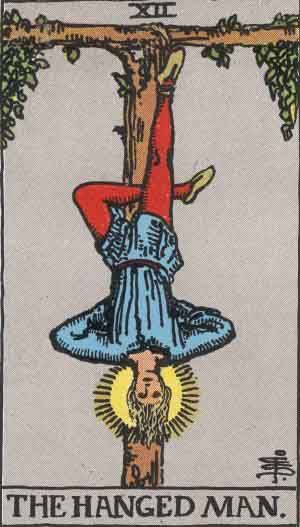
The last card that comes up for me is the Hanged Man, a card of reflection. The Hanged Man suggests one is able to see things from a new perspective, and re-evaluate the meaning and purpose of life before the next stage of a journey or undertaking.

I think maybe the cards are considering this place. I am taking care not to rush into anything. I am being positive and flexible. I am keeping my fingers crossed.

Saturday, June 17, 2006

Scarily accurate fave sleep position

How can a test determine this based on the kind of cheese I like and the fact I enjoy the smell of fresh spraypaint? Scary, because this is EXACTLY TRUE. Oso raro, ur freakin' me out!!!!

I am a pinching koala and tree!
Find your own pose!

Piece of the Pie

Photobucket - Video and Image Hosting

I went with gf and some friends to see "A Prairie Home Companion" last night, partly because I'm an Altman fan, partly because the cast of the movie is terrific. Like many people, I have always had ambivalence about the Garrison Keillor radio show. On the one hand, "A Prairie Home Companion" kept me company long nights on the road ever since college, and made many a Saturday on a dark stretch of highway less dreary. I've listened to Garrison Keillor croon while driving from Central Pennsylvania to New Hampshire, New Jersey to New Hampshire, Miami to Kentucky, North Carolina to Chicago, and Chicago to Boston, as I chased my life and ran away from it at the same time. For decades I've thought pretty much the same thing about the show, which is that it is a time capsule of sorts--not of the twenties or thirties or forties, which is what Keillor strives for, but of the eighties, with its nostalgia for a trumped-up version of the American past. Keillor's nostalgia for normative America (don't let the so-called "characters" of Lake Wobegon fool you) has always set my teeth on edge. There's never a poor part of Lake Wobegon. Nobody talks about trying to ignore the bad smell of some kids on the bus who live in dysfunctional families where clothes don't get washed too often. Nobody's father is sleeping with them. No families are kicked out of their houses for falling behind on mortgages or rent.

In Lake Wobegon, hostility is a character trait, not a product of class despair. Nobody get's knocked around by dad, or verbally humiliated by mom. There are no gay people, no transgender kids, no wives who leave their husbands and take up with butch female taxi drivers. Nobody finds out that their high school boyfriend is sleeping with their best friend, or that people who you think are your friends are secretly laughing at you. Nobody sends his family out to buy groceries one afternoon and blows up his garage, and himself with it. Nobody gets drunk and lights themself on fire in the middle of town.

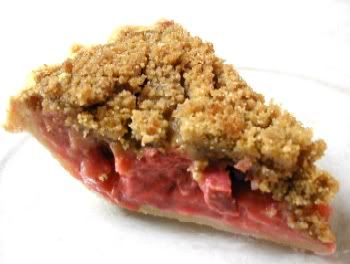
But these things really happen in small-town America. At least they did when I was growing up. Nowadays you could add a story about a neighbor with a meth lab, I guess, but the texture is the same. I know that Keillor is smart--very smart--but where's the pain of the smart kid who sees too much? There are no Joycean epiphanies in Lake Wobegon. Nobody feels things too deeply, or thinks too much. This is a radio show. All growing pains, joys, lusts, and betrayals can be sublimated by eating a big, fat, juicy slice of rhubarb pie. I know there's something dark in that, but we are never allowed to dwell much on it. As Sam Anderson points out in Slate's "A Prairie Home Conundrum: The Mysterious Appeal of Garrison Keillor," it's hard to know exactly what Keillor wants to satirize and what he wants us to feel fond about. "Keillor's humor has always been a bit of a puzzle," Anderson writes. "What is its irony/sincerity ratio? Is he mocking Midwesterners or mocking the rest of us via Midwesterners?"

Anderson's query about whether Keillor is satirizing Midwesterners or satirizing "us," while important, fails because it has already fallen into the Prairie Home Trap; on Keillor's radio show, we accept these Midwestern types as real BECAUSE we are so different from them. The "us" we become as we listen yearns for the simple earnestness of the Minnesota Lutheran, the prosthetic normativity of the Lake Wobegoner troubled by little more than long winters and vague regrets. Nobody gets queerbashed or race-baited in Lake Wobegon. Nobody gets turned down for pie.

And this "us" is insidious, bearing a distinct resemblance to the "us" whose wealth needed to be protected so as to trickle down in the Reagan Revolution, the "us" whose country needed to go to war under the Bushes, the "us" so eager to be mainstream that we allowed the legacy of a sexually and economically transformative social revolution to shrivel into gay marriage. As the comic strip Pogo famously pointed out, the enemy is us. And this creeping identification with the very values we should be trying to change is what probably makes many of us so cross--at him, at ourselves, at a life that isn't fair-- when Keillor croons seductively at us over the radio. Not Rex Reed cross, perhaps, but cross nonetheless.

The Altman movie is a little different. There, the singing sister act on the radio show is two middle-aged women on the edge. The Garrison Keillor character is an absentminded, logorrheic Lothario. People die and tell dirty jokes. I liked the Altman movie better than the radio show because there was a little more darkness there, not just in the places you were supposed to find it, like the dead guy and the angel of death and the love affairs that end badly, but in the simple sadness of the Johnson Sisters, played by Meryl Streep and Lily Tomlin, who in one strangely amazing scene, sing a sappy song about their dead mother that is deeply affecting. Their sagging faces and sad eyes reveal identities still traumatically tied to the little girls they were when they sang to cheer up a mother scrubbing floors. They still see themselves as these people, but what we see are two Baby Janes without the camp irony, connecting with the emotional part of themselves that still feels real and can only be brought out in song. It's a cliche that the performer is only alive when she is performing, but in this case Streep and Tomlin infuse the cliche with real pathos and believeability.

Their sadness is almost without dignity, because life goes on, and you are supposed to move on with it, and they really haven't. This attachment to a dead way of feeling that is nevertheless deeply alive for them in the present is a great metaphor for the whole project of "A Prairie Home Companion," and Altman gets this. He shrewdly lets his movie add a dark shadow of satire to Keillor's mythic Midwest, with its vaudeville circuit, roaming performers, and little restaurants where diners ward off modernity by eating pie, making biscuits, and singing gospel songs in the midwestern twilight.

Ah, the mythic Midwest. Just thinking about its wholesome values makes me want to take the fifteen minute drive down to what the Chicago visitor's bureau refers to as the North Halstead Business District, but everyone else calls Boystown, toss down a couple of shots, and tuck a dollar bill or two in a dancing boy's gold lame shorts. On the same street is a diner where all the poor gays go to eat before going out to the bars, and where all the drunk gays go to sober up after the bars close at night. They serve pie, too, but gf and I aren't really big on desserts.

Friday, June 09, 2006

Working

Photobucket - Video and Image Hosting
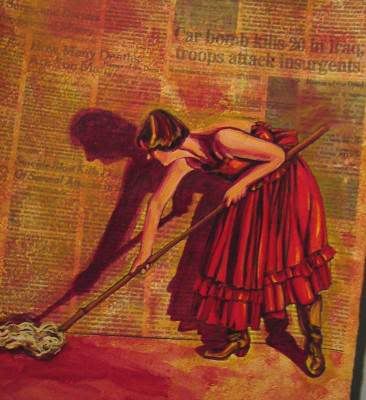
"OPERATION MOPPING UP" BY PATRICIA OLSEN

Every so often the Social Security office sends out earnings statements to freak me out. I just got one in the mail, and opened it more from idle curiosity than anything else. My taxed earnings began in 1976, making this the 30th anniversary of my official labor life. In 1976 I was 14, and it looks like I made 13 dollars. In 1977 it went up to 188, then 393, then 912. The year Reagan was elected I went to college, and made 1,587 dollars--summer earnings at minimum wage at the counter of a general store in the tiny town in New Hampshire where I grew up. It stayed the same throughout college, then doubled when I got a TA in grad school, doubled again the next year, and almost reached 10 grand in 1986.

It drops off for a couple years after that, as I delivered pizzas, took the GRE over and over, and worked in group homes for developmentally disabled adults. In 1990, my first year as a TA in a new PhD program, it broke 10,000 dollars, then jumped again when I got a fellowship in 1991, hitting an all time high of 13,205. It wouldn't be so high again until 1995, when I defended my dissertation and took a two year women's studies instructorship at 25K.

Twenty-five thousand dollars seemed like an incredible amount of money to me then. It seems pretty nice now, but when you are a graduate student, anything double digit seems impossibly luxurious. I jumped into the 30s with my first job, then low 40s with my second, and that was it. One year, 2004, I actually broke 50K with summer teaching, the most money I'd ever made. I have had ten years--one third of my labor life--where I have made more than thirteen thousand dollars a year. This year won't be one of them.

The bar graph is dropping again, but there's something oddly comforting about looking at your life as earnings data. The numbers are so much more honest than the everyday cultural message we get on television, in the movies, in advertising that our REAL lives are our leisure hours, as if the time we work isn't real and doesn't matter. As if we don't live it.

But work is the most lived time there is. An hourly job can be like being trapped in a sick body. You don't float free of it; it encases you and drags you down into the interminable minutes and seconds of the present. After you're done, when you feel better, you can't remember it much until you're in it again. I remember watching the clock, opening my paycheck and wishing it was more. I still do that, but I don't have to watch the clock anymore, or punch in, or deliver chicken parmesan sandwiches to scary frat houses at midnight only to get exact change in payment. I may not have a career, but I have mobility that I could only dream about then. I can freelance, I can adjunct, I can land piecemeal professional jobs at part-time hours that pay more than full-time minimum wages. I think about all the families trying to support three, four, five people on that much money or less, working those hourly jobs, sometimes holding several at a time.

I remember my first job washing dishes in a restaurant on weekends, in 1977. Part of the hazing of new dishwashers, called "maggots" by the line cooks, involved playing Bowl-A-Rama with big pots down the length of the kitchen floor, with my feet as the bowling pins. I was supposed to hop around good-naturedly to avoid them, smiling, never showing how upset I was. I remember the filthy floors, the smell of soapy steam from the big dishwashing machines, the potato peeler machine, the french fry cutter, the fryolater full of hot grease. I remember bussing tables, dishes clinking in the dull gray plastic trays, my hands smeared with grease of other people's food. I remember taking cigarette breaks just to have a place in my head that was mine. I remember watching with agony as the clock hands crawled up the side of the wall, impossibly slow.

My first day was hell, but I came back for a second. At the end of the shift I mopped the kitchen floors while the line cooks went out front to smoke, finished for the night. I remember throwing bleach and soap on the smeared, filthy tiles and moving the mop in a curving motion across the muddy suds. I remember the pleasure I felt as the gleaming white floor emerged underneath--a pleasure I still take in a clean floor. At the end of the shift I went out front, and the supervisor gave me a beer out of the group sixpack. We all sat there and smoked before going home, sharing the cameraderie of working people. Tired, with the smell of the grill in our hair, we savored the end of the day with our feet up on chairs, and the good taste of cold beer in our throats.

Thursday, June 08, 2006

Why the nosering in my heart will always have a dildo

Photobucket - Video and Image Hosting

I'm trying to process the dinner I had tonight with gf's colleague and her husband, a philosophy PhD who now works for a big law firm in the city. It was a lovely dinner, lively conversation, great food. I was impatient to meet him because I hoped he would have all the answers for me. Was law a good change? Was he happy? Did he regret the self he left behind? WAS there a left behind self? What was his life like? What did he want?

I had heard about Philosopher before--his corporate law job is a big part of why he and Colleague have a lovely condo where they can keep their gorgeous Labrador Retriever siblings, one black and one golden. He went to Elite University Law School. I don't know what I thought he would look like, but I imagined a preppy guy, a little impatient, being genial to his wife's friends.

When I met him I was surprised. He looks more like Beck, but with a stronger chin,and a touch of the young Mick Jagger, only with big, breathtaking green eyes. He wears his bangs long and in his face, and he pulls at them with his pale hands. He has a skinny rocker body. This is the face of corporate law? I thought, feeling like maybe I wouldn't be such a sore thumb lawyer after all, with my four holes in one ear, my wide-gauge barbell earrings, my nose ring, my platinum spiky hair. I know I can't look like this in a law office but still, I will always be wearing a nose ring in my heart, not literally in my heart but in my fantasy of myself. So maybe Philosopher Beck Jagger could go to super-conservative Elite U Law and still keep his rocker soul intact.

I was bursting with questions and he answered them all patiently. He spoke of how going to such a conservative place was really interesting because he could be around people who disagreed with his politics. Then he admitted that some of the economic theory had gotten to him, changed his ideas. I asked him if he had felt alienated trying to keep intact in such a setting. He considered my question as if it had never occurred to him before. I asked if things had gotten better for women there, since Elite U has long had a reputation as NOT a great place for women law students. He told me half the students were women, and that he had lots of women professors.

He got most animated when he spoke of the law clinics at Elite U and how they had convinced him to drop his dream of becoming a law professor and dedicate himself to litigation instead. Colleague told how he had done 300 hours of pro bono work and gotten it all to count towards billable hours, even though the limit is 75.

At dinner we got talking about my job writing encyclopedia entries about dildos and such. He asked me what was interesting about dildos. I talked about the feminist sex wars, the lesbian sex radicals and dildo enthusiasts, the breakaway leather community. He asked why lesbians wanted dildos when they were repulsed by cock. When he said cock, I think gf and I both jumped in our seats. Colleague, GF and I tried to explain that dildos and "cock" had nothing to do with each other. I tried to offer that the insistence with which some lesbians maintain the distinction between cocks and dildos is sometimes unconvincing, if politically expedient. In the back of my mind I was wondering whether any of the stuff I know about gender and sexuality would be useful in my new life. Feminism, maybe. But dildos?

After dinner colleague and GF talked shop, and lawyer Beck sweetly offered to give me his old 1L hornbooks, which was quite amazing, as they are expensive and he didn't even write in them very much. He gave me a lot of them. Looking at all his philosophy books in the livingroom, with very few law books to be seen, I asked him whether he felt that he had let a part of himself go, or whether he felt it was still with him. He told me it was still with him.

Ten minutes later it was time for us to go. Colleague said goodbye and we walked out with Philosopher Lawyer, me staggering under the books, he walking the dog, gf going on ahead to the car, all of us looking away from each other, all of going quietly in different directions down the street. GF was looking for the car. Lawyer Beck was on his way to bed, already dreaming of another job and another time when he spend more time on the underdog and less time paying off his student loans. I was wondering what the future would hold, as I always do these days.

Tuesday, June 06, 2006

Su She

Photobucket - Video and Image Hosting

Another disturbing example of carniverous misogyny, pointed out on feministing. What seems bizarre is that this image is being used to sell cosmetics to women. The logic of the ad is that women want to be eaten as if they were shrimp or sushi. Or is it that women want their sushi eaten, and will bend over backwards buying cosmetics in order to get oral sex? Hmm. Maybe this ad campaign isn't quite so bizarre as I thought . . .

Sunday, June 04, 2006

Astrology Lesson

Photobucket - Video and Image Hosting

Today we spent the day with college friends of gf and their three wacky and beautiful daughters, age 9, 7, and 2. We tooled around the city, went to the aquarium, played in the postmodern fountain with lots of other shouting, running kids from all over the city, and ate deep dish pizza. I got a sunburn. At dinner we talked about astrology signs. The dad is a Virgo, like me, mellow, like me, and from the country, like me. We found out we were born in the same year, two days apart. The girls asked what astrological signs were. We explained that some people thought that the stars foretold things about your personality, and we told them what their individual signs were and what they meant. I taught them how to cross eyes, then cross one at a time (a special talent of mine that does not especially endear me to mothers). We worked on wiggling ears, and I feel I made some headway with that, too.

We fell in love with those fierce little girls in the space of the afternoon, and tonight, gf spoke sadly about how hard it has been for her to love other people's children and lose them, because of geographic distance, break-ups and lost friends, or just, lost friends. I can't help thinking, though, that the big love of just one afternoon counts for something, even if it's the only afternoon you'll ever get to spend with them running and screaming in the park.

Sometimes Astrology is the best medicine. Here is a lesson in the stars for me (and maybe for other Virgos out there?) for Monday, June 5:

"Hurt feelings"

"Through a careless remark, a slight clumsiness, or a wrong word without bad intent, you suddenly find yourself in an embarrassing situation, feel yourself hurt or belittled. If you react in an injured manner, demand apologies or become aggressive, this will only cause further, unnecessary pain for you. Despite this, you should not just compromise but rather think the incident over again, as it points to a particular area in which you are oversensitive and that could, under other circumstances, lead to a complete overreaction. The more you find out about this personal sensitivity the easier it will be to accept it and to make others aware of it."

You can't really go wrong with this advice, can you?

Saturday, June 03, 2006

Social Atavism

Photobucket - Video and Image Hosting

Woke up to the bad, but not entirely unexpected, news that Bush has decided to support a constitutional amendment banning gay marriage. Appparently enshrining hate in the constitution is easier than coming up with a coherent domestic policy (or foreign one, for that matter). The right doesn't think this will fly; the left doesn't think this will fly, but the right assures us that it is better to send ineffectual Republicans back to Washington on a bigotry platform than reassess the complete lack of moral and fiscal responsibility of this administration. I, for one, look forward to the courtroom arguments attempting to justify the so-called "traditional" definition of marriage as between one man and one women. You don't even need to mention gays or lesbians; for starters, here's a nice factoid from one of the more interesting pro-polygamy Christian websites out there:

"Polygamy, more correctly called polygyny, patriarchal or plural marriage (in which two or more women are married to one man) was, together with monogamy, a normal practice of the Hebrew people (until 1000 A.D. when it was outlawed for a thousand years by the Rabbis) and subsequently in the European Christian Church (until 600 A.D. when the Catholic Emperor, Justinian, outlawed, suppressed and persecuted it). Not until the late 20th century did patriarchal Christians begin to come out of hiding and once more begin living this time-honoured and biblical marriage estate."

Aside from the inaccuracy of completely forgetting 19th century Mormons--patriarchal Christians if ever there were some--this is a pretty good summary of Biblical marriage traditions. Not exactly one man and one woman.

Hilaire reports even worse news on the Canadian front: apparently conservative Canadian Prime Minister Brian Harper, no doubt encouraged by his neighboring president to the south, has decided to reopen the question of gay marriage regardless of the fact that Canadian citizens democratically voted to make it legal last summer. Who is he pandering to? Would it be the so-called Christian right?

The illogical appeal to "traditional" marriage isn't really traditional at all, but the right wingers never cared much for history anyway. They want to skip over the last 350 years or so and take back Massachusetts for the men in funny hats with buckles. I wish I could click my heels, go to sleep, and wake up from the nightmare that social policy in this country has become. These days, you may be a proponent of intelligent design, but you also can't help seeing that d(e)evolution happens, baby.

Thursday, June 01, 2006

Women Are For Eating.

Photobucket - Video and Image Hosting

And not in a good way. Check out the newest of the ever more heinous Burger King ads aimed at "men" (if by "men" you mean the construction of men in these ads as angry resentful slobs intent on hastening their own demise in some kind of misguided attempt to turn back the gender clock).

Once again, Irony+Sexism=Sexism, plain and simple.

Wednesday, May 31, 2006

Flight

Photobucket - Video and Image Hosting


So it's the last day of class, and in the time-honored tradition of last classes, I show a movie. A good one (Live Nude Girls Unite!), but also an admission that I just can't get it up for one more class discussion. The students, too, have used up their intellectual mojo. It is hot--near 90. Life on the Big Lake means three months of March, then suddenly, July!

The students like the movie, and want me to hold office hours after so they can talk about their manifestos. I go to the office, the empty spare room off the lower floor of the house that houses Gender Studies, a home long since converted into a catch-all minority studies center. The administrative staff are spraying table tops with windex downstairs. They invite me to the farewell for the Big Gay History Professor who is leaving Elite University for Yale (yes, him). I nod politely with no intention of going. One of the few benefits of adjuncting is that you don't have to show up and make kissy face if you don't want to.

The students come to the office in groups. They want me to look at their final projects, their manifestos, because they want to see my reaction. They are proud of them. I notice that their shyness is gone. The high point of my day is when they tell me that they some of them had been advised to take Gender Studies to boost their GPA. "But it's hard!" they say, in a complaining voice, not complaining. They love that it was hard. I love them for liking the difficulty. We are not sure how to close things, but I know that saying goodbye is really why they have come. It's a nice thank you. I thank them too. They were lovely.

The growing hum outside my door tells me the farewell party is picking up. Students come in, close the door to keep the noise down, and finally, leave. The last one marches off, and I peek out after them, realizing with a sinking heart that I have failed to make my exit in a timely manner.

The entire room is full of people chatting with their reception faces on. Earnest, leaning into their cake and napkins. I see to my horror that someone I used to know is in the room, talking away but facing the other direction, away from my door. An ex friend, the one who dropped me a while ago and who decided not to say hello to me in the hotel lobby at MLA (ok--to be fair, I decided then not to say hi either). Trapped! What can I do? Slink by in my damp and unflattering t-shirt, heavy, defeated? Me, the adjunct; her, next year's director of Gender Studies at Elite University, both of us the same age. Once we were young hopefuls. We double-dated with our respective spouses. I fed her cat when she went away, a lifetime ago.

I can't do it. I just can't go into that room.

Fortunately, my little borrowed office has, oddly, two doors, opposite each other on two facing walls. The door less traveled by leads to a little hallway and bathroom. From that hallway, which opens further down one side of the crowded main room, I might be able to reenter the big room and go out the rear of the building without being noticed. It is worth a try. The alternative is sitting in an office with bad wireless reception for an hour, hiding.

I quietly close and lock the door opening to the main room. I turn out the light and unlock the other, opposite door, making sure that the knob locks behind me. First stop, bathroom. Then stride purposively into the empty end of the big room, turn without looking away from the crowd, and proceed to the back entrance. I have never used this door, but I know it is there.

All goes well until I try the back door. The lock won't turn. A sign tells me not to use it, that it won't lock behind me if I go out. I recall that security locks up the building every evening, checking all the doors before setting the alarm. It will be ok. Have.To.Get.Out.Now. I fumble with the lock, feeling like any minute someone will see me, stop me, and lead me back to the Room of Shame. Can't people see me? Isn't anyone wondering what I am doing here at the end of the hall? At last I slide the bolt across and fall out into the open air, choking with panic.

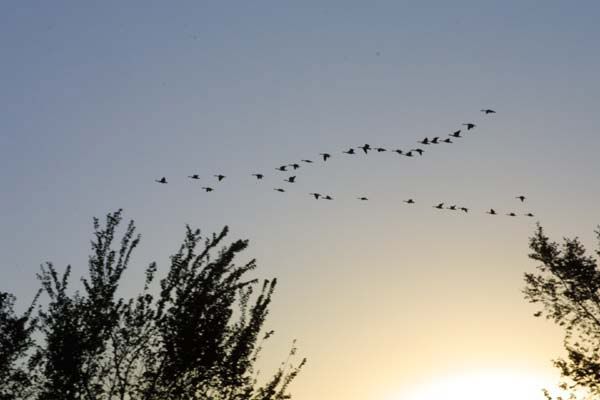
Outside, the air is heavy, and it is raining softly, sizzling and evaporating even before it hits the pavement. No one has followed me. I turn, puzzling the best route to my car. The sun is trying to break through the rain, making the air look pink. I move south, the only way out of the alley, towards a huge puddle directly across the path I have to take. When I reach it, however, I see immediately that it isn't that deep at all, only so clear that it looks like a lake. I step over it and into it, the water barely reaching the tops of the thick soles of my sandals. I tiptoe and hop, holding my pantlegs up like a ball gown, feeling the warm drops splash my toes. With each step the rooftop spires reflected in the puddle waver, dissolve, and reappear, dark spikes moving in the water under my feet, like the shadows of migrating birds.

Friday, May 26, 2006

so zoo me

Photobucket - Video and Image Hosting

It's been hard to blog lately because of the end of the season, the end of the quarter, and the end, for me, of who I've been. While there will be a lot of continuity in the next several years, there will also be, well, not. So I decided to get back on the bloggin train with an entry about nothing in particular that reminded me how intensely thinking can happen in everyday life without any institutional assistance at all. After all, we think hard every day, even at the zoo.

Today we went to the zoo. My dad is visiting, and we thought we should ramble through the park a bit. I don't know why it made me feel better to go to the zoo, but it did. Maybe it's because I live in a great city with a free zoo. Maybe it's because being outside on the first warm day of early summer connects a person to everything and everyone again after a long winter. Maybe it's good to remember the rest of the planet, and the creatures on it, as a way of keeping perspective. All I know is that zoos are places where you can't help thinking--about captivity and freedom, about preservation and ecology, about ethics and species, about unconscious and conscious ways of living, about habits, about mental darkness, about selflessness, relaxation, justice, civic duty, community, communication, separation, clumsiness, and meaning well. It's not that zoos are nice or horrible. They're just very, very complicated places.

So we went to the zoo. And I'm putting up a giraffe because there is something inspirational about such an improbable creature being able to reach so high.

Friday, May 05, 2006

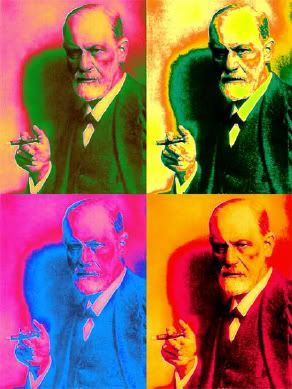
Happy 150th Birthday Dr. Freud!

Photobucket - Video and Image Hosting

Happy Birthday May 6th to the man who made postmodernism possible. I discovered Freud for real in graduate school, in the wake of Juliet Mitchell's reclamation of Freud for feminism, and feminism's reclamation of Freud for Lacan. I've been trying to teach him to skeptical undergraduates ever since. The really amazing thing about Freud is that he tried to listen to women and he took women on as students in an era in which such things were marvelous. He laid the groundwork for the critique of so-called "normal" heterosexuality, showing that almost nobody isn't sexually queer in some way, and outlining in painstaking detail the difficult road children must take as they try to assume the burdens of gendered subjects. He found reluctance, nostalgia, sadness, deflection, self-sacrifice, loyalty, loathing, and courage in every form of human attachment. His writing is often fair and kind, and the mind revealed in his work is one genuinely moved by all kinds of people.

One of my favorite Freud moments occurs is his essay about Leonardo da Vinci and sublimation, Leonardo da Vinci and a Memory of His Childhood. Positing that Leonardo's attraction to his own mother was the source of his homosexuality, Freud attempts to account for Leonardo's artistic output and scientific curiousity by theorizing that Leonardo literally transformed his homosexual impulses into art and research. Noting the playfulness of Leonardo's mind, Freud writes:

"Indeed, the great Leonardo remained like a child for the whole of his life in more than one way; it is said that all great men are bound to retain some infantile part. Even as an adult he continued to play, and this was another reason why he often appeared uncanny and incomprehensible to his contemporaries. It is only we who are unsatisfied that he should have constructed the most elaborate mechanical toys for court festivities and ceremonial receptions, for we are reluctant to see the artist turning his power to such trifles.

. . .It is probable that Leonardo's play-instinct vanished in his maturer years, and that it too found its way into the activity of research which represented the latest and highest expansion of his personality. But its long duration can teach us how slowly anyone tears himself from his childhood if in his childhood days he has enjoyed the highest erotic bliss, which is never again attained."

The wistfulness of this passage always gets me--the appreciation of the innate playfulness and creativity in everyone, the ominous sense of the world ready to crush that creativity and replace it with the gravitas of respectability, the longing of the Freud who comes through in this brief moment as a man trapped by adulthood, a prisoner gazing back at the bright patch of sunshine receding from him, as childhood recedes from us all.

Thursday, May 04, 2006

Detachability

Photobucket - Video and Image Hosting

It's very strange to live your life without getting attached to any of it. Most people like to think of themselves as hard-headed, rational, practical. It comforts us to imagine we control how permeable we are. What goes out and comes in needs monitoring, as if love and satisfaction are scarce emotions, and precious. If you are an adjunct, you need to not have an investment in your students, the curriculum, or the university where you teach. It helps if you try not to notice how beautiful the trees are, all in bloom, or the pockets of hot perfume they create as you walk to class. Even better if you block out the feel of the sun warming your skin and hair as you cross from your car, and stop yourself from admiring the steps down, across, then up that negotiate a dip in the landscape next to the hockey fields,stop yourself, too, from lingering on the vast parklike places gleaming with new greens and yellows as far as you can see.

Every spring the blossoming trees amaze me. I always forget about them in the summer, fall, and winter. Especially winter. I think it's because you forget how to smell in the winter, since the air is so cold and there's nothing there, except maybe exhaust, or mud, or maybe a little ozone. When the blossoms come, the rows of ugly buildings are bathed in creams and pinks and delicate gold braid, and the dirtiest sidewalks and roads become sweet pathways littered with delicate crushed petals. Their appearance tears at your heart because you know you can only love them today, maybe tomorrow at most. They are supremely undependable. In a matter of days the wind will rip down all their lacy finery, and the hot green shoots of summer will uncurl their naked little fists in every tree,all up and down the block.

When you get to class, and you have a particularly fun discussion that day about sexism in the workplace, or beauty culture, or docile bodies and working out, you have to remember you will never see these students again. You have to enjoy the conversation just for now, and then let it go. There are four more weeks, and then the quarter is over, and it all ends for good.

So you enjoy them. They say funny things that make everyone laugh. You bond with them about the difficulties of gendered self-presentation in the workplace. You like it that they like the assignment they are working on. You grow fond of them, because they are learning, thinking hard, strategizing how to use what they have learned in the world. You notice that they are more comfortable, more open, and that those awkward pauses in class have disappeared. This intimacy is so beautiful, and so fleeting.

Then class is over, and you move into the hall, out the doors, onto the sundrenched grass once more. The air smells like blossoms, heated with an undercurrent of cool wind, as if somewhere out there on those green fields the ice is still melting. Keep walking past the blossoms, past the flowers, past the muddy fields. Find your car and drive away, across the city. Say goodbye every day, a small goodbye for now, the first goodbye of larger ones that will come later, inevitably, no matter how much or how little you try to feel about them.

Monday, May 01, 2006

She's Unable to Dine Today, Madam

Photobucket - Video and Image Hosting

I am sorry to find that Anonymous Professor has taken his blog down. I personally thought his habit of calling people "bitches" and "morons" was horrible, but he should be able to have a blog if he wants one. My biggest beef was with Inside Higher Ed linking to one of his particularly hateful posts, but I also took issue with The Chronicle's snotty "Thomas Benton" as well. I do feel as if everybody has the right to free speech, but every time I found myself feeling the least bit sorry, I reread Anonymous Professor and felt too disgusted to even think about retracting a word.

Internet blogging is not the same as private journaling, anymore than giving a speech in a town square is the same as talking to one's self. Anyone can happen by and read it. So why are people so bent out of shape when their rants get read?

R. I. P., Dr Mandrake. I'm sure we haven't heard the last of you.

Thursday, April 27, 2006

Miss Manners Regrets

Photobucket - Video and Image Hosting

Is it our job to teach manners? Should it be?

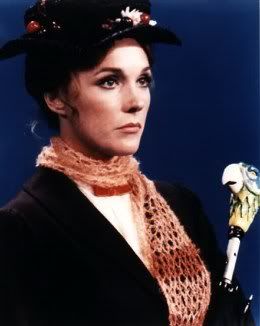
As a bossy oldest sibling, I am happy to enforce norms and box ears. However, some bloggers take issue with "raising" students as well as teaching them. This is a point which also turns on gender in several ways, since it may very well be that those of us who resist and resent feminizing roles in the academy might also draw the line at being Mommy in the realm of manners, while those of us who do not feel particularly feminized might be perfectly happy to enforce better behavior. Or, some of us who HAVE experienced quite a lot of pressure to "act like a girl" in the academy--ie be daughter-like or mommy-like in legible ways--still might not mind being Miss Manners, because there's something satisfying and powerful about putting young louts in their place. After all, Mary Poppins understood that most of the fun of being in charge was being PERFECTLY superior in every way.

I am in the latter category.

It may be that it is related to teaching English, as I imply in my earlier post. After all, if we draw the line at knowledge (I am teaching Contemporary British Lit., and that's ALL I'm teaching), then I guess we would only teach writing in writing classes. That seems absurd. If we read Foucault, we know that besides our expertise, we are also correctly training docile bodies. That also makes the issue of not teaching manners and civility seem like an arbitrary line in the sand. After all, we are already doing so much more than teaching our actual narrow fields.

I wonder what you think?